Canopy Size Decreased Without Removing Trees
Crown Reduction in Toms River for properties where large trees interfere with utility lines or building clearance
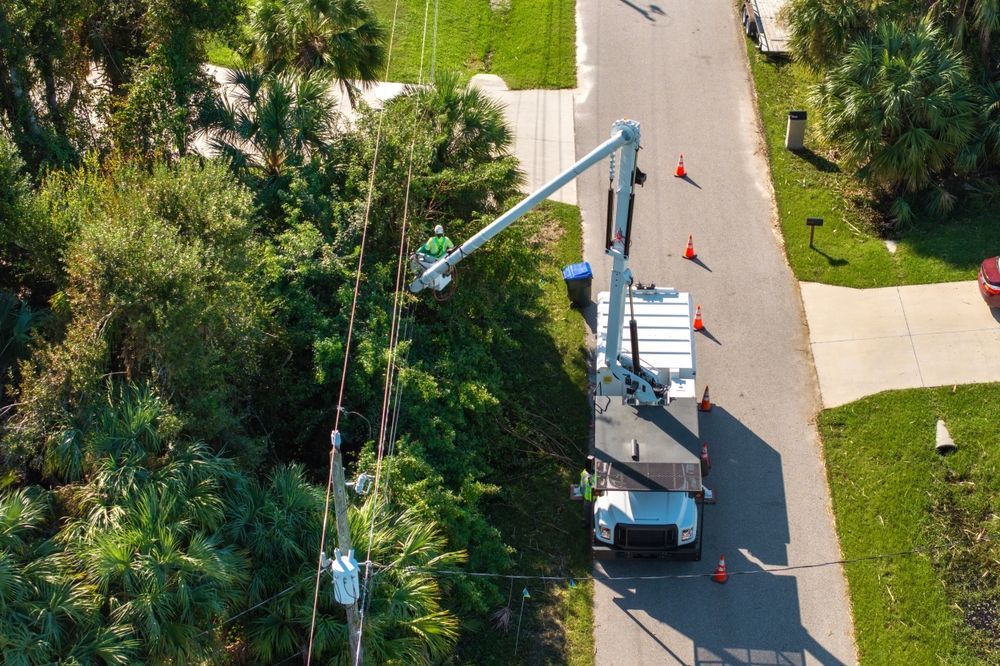
Mature trees sometimes outgrow available space as canopies expand toward structures, utility lines, or neighboring properties, creating conflicts that complete removal would otherwise address. Crown reduction decreases overall canopy height and spread while maintaining the tree's natural structure and health, offering an alternative when removal is undesirable but clearance problems require intervention. Properties in Toms River, Brick Township, Howell, Township, and surrounding areas with established landscapes benefit from this approach when trees provide significant shade or property value but need spatial management to function safely alongside buildings and infrastructure.
The process involves selectively shortening primary scaffold branches back to lateral growth points, reducing canopy dimensions without leaving stubs or creating unnatural shapes. Proper crown reduction requires understanding how different species respond to significant cuts—some trees tolerate aggressive reduction while others decline when too much photosynthetic capacity is removed at once. The work reduces mechanical stress on large limbs and improves clearance around structures while preserving the tree as a landscape feature.
Request a site consultation to determine whether crown reduction suits your specific clearance concerns.
Why Careful Planning Prevents Unnecessary Damage
Crown reduction projects begin with evaluating how much canopy can be removed without compromising the tree's ability to produce sufficient energy through remaining foliage, typically limiting reduction to twenty-five percent of total canopy in a single session. Cuts are made at lateral branch junctions where remaining growth can assume the terminal role, avoiding mid-branch cuts that leave vulnerable stubs prone to decay. Species with strong compartmentalization ability tolerate this work better than those that struggle to seal large wounds.
After reduction work finishes, you notice defined clearance around buildings or utility lines, reduced risk of branch failure from overextended limbs, and a smaller overall canopy footprint while the tree retains recognizable form. Storm winds exert less force on reduced canopies, and long-term maintenance becomes more manageable as the tree occupies controlled space. The tree continues providing shade and aesthetic value without the conflicts that prompted the intervention.
This service does not replace removal when trees are structurally unsound or severely declining—reduction works only on healthy trees requiring spatial management. Multi-year reduction plans distribute stress across several seasons for trees requiring significant size decrease. Properties considering this option should understand that crown reduction requires ongoing maintenance to manage regrowth and maintain achieved clearances over time.
Common Questions About This Service
Crown reduction involves technical decisions about how much canopy to remove and whether the approach suits specific situations.
Advanced Tree Experts evaluates whether crown reduction offers a practical long-term solution or if alternative approaches better address your property's specific clearance challenges. Arrange an assessment to review options that balance tree preservation with functional clearance requirements.
What situations make crown reduction appropriate instead of removal?
Reduction works when trees are healthy but oversized for available space, when removal would eliminate valuable shade or screening, or when property owners want to preserve mature specimens despite clearance challenges.
How much canopy can be safely reduced in one session?
Most trees tolerate reduction of twenty to twenty-five percent of total canopy height and spread, with larger reductions requiring phased approaches across multiple years to avoid excessive stress.
Why does crown reduction cost more than standard trimming?
The work requires more technical expertise to maintain tree health during significant cuts, involves careful planning to preserve natural form, and often requires specialized equipment to access upper canopy areas safely.
What tree species respond well to crown reduction in Toms River?
Maples, oaks, and most hardwoods tolerate reduction when cuts are properly placed, while birches and some ornamental species may decline if reduction is too aggressive or poorly executed.
When does crown reduction fail to solve clearance problems long-term?
Trees with rapid growth rates require frequent follow-up reduction to maintain clearances, and some situations involve ongoing conflicts better resolved through complete removal and replacement with appropriately sized species.