Evaluating Drastic Height Reduction Carefully
Tree Topping in the Toms River area for situations where property owners request major canopy reduction and alternative approaches are discussed
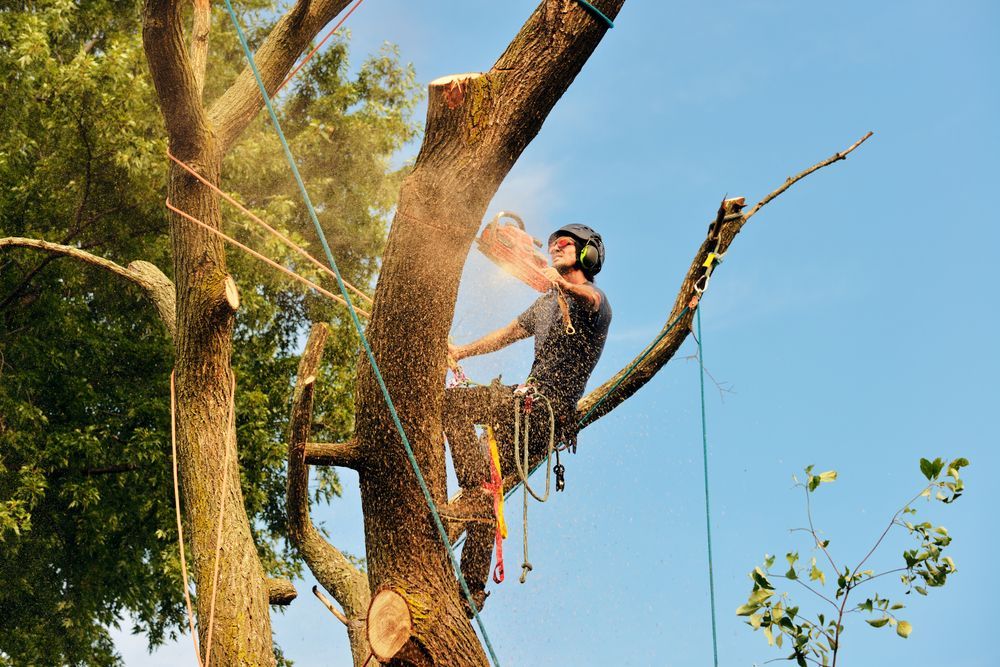
Topping involves cutting the main leader or major scaffold branches back to stubs, a practice that removes much of the photosynthetic tissue the tree relies on for energy production. Requests for topping often come from concerns about height, utility line clearance, or storm damage risk, but the procedure typically creates more problems than it solves: rapid regrowth of weakly attached shoots, increased decay at large cut sites, and structural instability as new limbs develop without the taper and strength of the original branches. Advanced Tree Experts evaluates each situation individually to determine whether topping is unavoidable or whether targeted pruning, cabling, or partial removal might address the underlying concern without compromising long-term tree health.
When clients request topping, the first step involves understanding the specific issue: Is the tree too tall for the space it occupies, does it interfere with overhead wires, or has storm damage left the canopy unbalanced? Those problems often have solutions that preserve more of the tree's structure, such as crown reduction pruning that removes height while maintaining branch taper, or selective limb removal that clears utility lines without cutting main leaders. The discussion focuses on what the tree will look like five and ten years after the work, since topped trees produce dense clusters of vertical shoots that require ongoing management.
Arrange a consultation to review your tree's condition and discuss all available options before deciding on any major canopy reduction.
What Happens After Major Canopy Reduction
Topped trees respond by pushing out numerous fast-growing shoots from the cut sites, a survival mechanism that attempts to replace lost foliage as quickly as possible. These shoots, called water sprouts or epicormic growth, attach to the outside of the stub rather than developing the interlocking wood fibers found in natural branch unions. The result is a tree that regains height rapidly but with structurally weaker branches that are more prone to breakage during wind events or heavy snow, particularly in coastal New Jersey where nor'easters create sustained high winds.
If topping is completed, you'll notice the tree's silhouette changes dramatically: the broad, spreading canopy is replaced by blunt stubs, and within one growing season, clusters of thin vertical shoots emerge from each cut. The tree becomes a maintenance cycle, requiring repeated pruning to thin the new growth and reduce the risk of branch failure, and the original concern about height returns within a few years as the shoots extend upward.
Alternative strategies like crown reduction maintain the tree's natural form while addressing height concerns, and those methods result in slower regrowth and better long-term structural integrity. The choice depends on your priorities, the tree's condition, and whether preserving the tree in a healthier state is feasible given site constraints.
What Property Owners Usually Ask
Questions about topping often focus on whether the practice is ever justified and what other options exist for managing tree height.
Advanced Tree Experts reviews your tree and discusses the full range of options, prioritizing approaches that maintain structural integrity and long-term health whenever practical. Call to schedule a detailed consultation and receive professional recommendations tailored to your property.
What is the main difference between topping and crown reduction?
Crown reduction removes height by cutting back to lateral branches that are large enough to assume the terminal role, maintaining the tree's natural taper, while topping cuts into the main stem or large branches without a suitable lateral, leaving stubs.
How long does it take for a topped tree to regrow?
Most species produce vigorous new shoots within one growing season, and the tree can regain much of its original height within three to five years, though the new growth is structurally weaker.
Why do some trees die after topping?
Removing a large percentage of the canopy at once can deplete the tree's energy reserves, and the open wounds created by large stub cuts allow decay fungi to enter the trunk, sometimes leading to progressive decline.
When is topping the only realistic option?
Situations involving severe storm damage where the main leader has already failed or utility emergencies where immediate clearance is required may leave topping as the most practical short-term solution, though long-term tree survival is uncertain.
What alternatives should be considered before topping?
Crown reduction, selective limb removal, cabling to reduce movement, or complete removal followed by replanting with a smaller species all preserve better outcomes depending on the specific site and tree condition.