
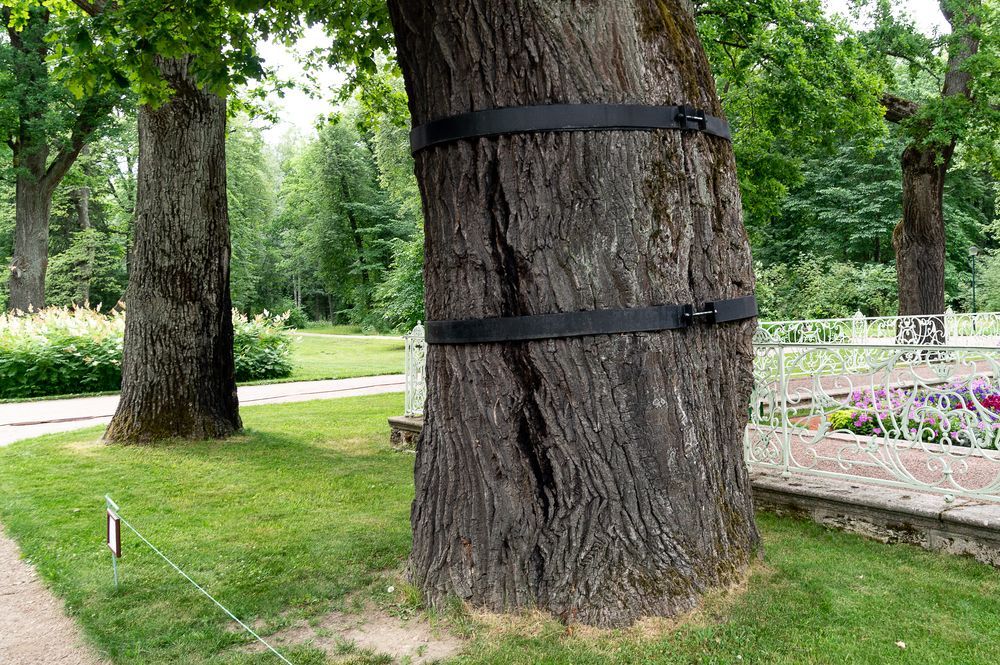
Supporting Structure When Removal Isn't Preferred
Tree Bracing in Toms River and surrounding areas for mature trees showing structural weakness where extended preservation is the goal
Weak branch unions, split trunks, or codominant leaders create failure points that worsen over time as the tree grows heavier and weather applies stress to the compromised areas. Bracing installs rigid metal rods through the trunk or major limbs to physically reinforce those weak spots, limiting movement and reducing the chance that the structure will separate completely during high winds or ice loading. The hardware doesn't heal the defect, but it holds the tree together long enough for compartmentalization to occur and for the tree to add stabilizing wood around the damaged area, extending the functional life of specimens that would otherwise require removal.
Advanced Tree Experts evaluates each tree's specific failure risk before recommending bracing, examining the size of the crack or split, the angle of the codominant stems, and the tree's overall health and growth rate. Bracing works best when installed before the defect has progressed to the point of active tearing, and it's often combined with cabling to limit the range of motion in the canopy. The rods are threaded through pre-drilled holes and secured with washers and nuts, creating a permanent connection that transfers load across the weak union.
Arrange a consultation to assess whether bracing can extend the life of a structurally compromised tree on your property.
What Bracing Actually Accomplishes
Bracing systems use threaded steel rods, typically three-eighths to five-eighths inch in diameter, installed perpendicular to the plane of the split or weak union. The rods are placed through the center of the trunk or limbs at a height that provides maximum leverage against the failure point, and they're tightened to draw the separated sections back together or to prevent further spreading. The installation doesn't restore the tree's original structural integrity, but it arrests the progression of the defect and gives the tree time to grow additional wood that shares the load more evenly.
After bracing, the tree's movement during windstorms becomes noticeably restricted in the braced area, and you won't see the gap widening or bark tearing further along the seam. The tree continues growing around the hardware, gradually incorporating the rods into the expanding trunk tissue. Over years, the compartmentalization process isolates the damaged area and new wood forms a bridge across the defect, though the original weak union remains a permanent feature of the tree's anatomy.
Braced trees require routine inspections to verify the hardware remains tight and the tree hasn't shifted in ways that compromise the support system. Coastal storms common in New Jersey create repeated stress cycles that can loosen fasteners or cause the tree to grow in ways that alter the load distribution, so annual checks ensure the system continues functioning as intended.
Questions Before Starting Your Project
Tree owners often ask about the limits of bracing and how long the support system remains effective.
Advanced Tree Experts designs customized bracing systems based on the specific failure risk and tree condition, prioritizing solutions that preserve trees whenever practical. Call to schedule an evaluation and discuss whether bracing can protect a structurally weakened tree on your property.
What types of defects can bracing address?
Bracing works for vertical splits in trunks, codominant leaders with included bark, and crotches where two major limbs form a weak V-shaped union, but it's not effective for decay-weakened wood or root failure issues.
How long does a bracing system last?
Steel rods remain structurally sound indefinitely as long as they're properly installed and maintained, though the tree's growth and weather stress may require adjustments or additional hardware over time.
When is bracing combined with cabling?
Cabling limits the movement of the canopy above the braced area, reducing the dynamic load on the rods and preventing the defect from being stressed repeatedly by wind-induced swaying.
Why can't bracing repair the original defect?
Bracing immobilizes the weak area but doesn't restore the interlocking wood grain that provides natural strength, so the tree remains structurally compromised even with hardware support
What happens if a braced tree continues to decline?
If the tree develops significant decay, loses vigor, or shows signs that the defect is progressing despite bracing, removal becomes the safer option, but bracing often buys several years of additional service from valuable mature specimens.