
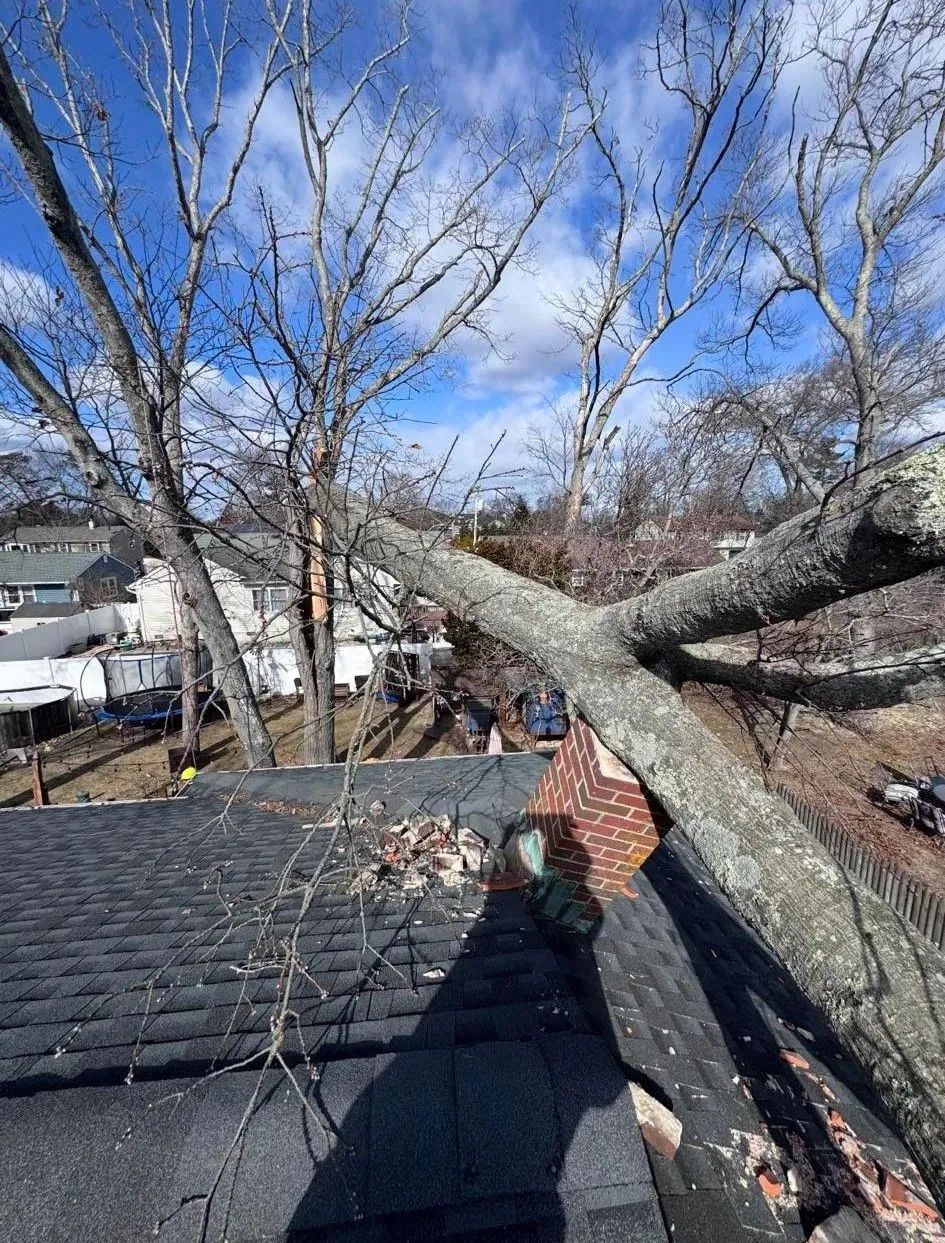
Immediate Response When Trees Create Hazards
Emergency Tree Services in Toms River for storm damage, fallen trees blocking access, and dangerous limbs threatening structures
Severe weather brings down trees across driveways, drops heavy limbs onto roofs, and leaves unstable trunks leaning against homes or power lines. Advanced Tree Experts responds rapidly to emergency tree situations where fallen or damaged trees block access routes, threaten structures, or create immediate safety hazards. Crews prioritize stabilizing dangerous conditions, clearing critical access points, and removing debris that poses ongoing risk to property or occupants.
Emergency work focuses on safely removing fallen material without causing additional damage to structures, vehicles, or surrounding landscape. This involves rigging techniques to control how sections are lowered when trees are entangled in buildings, careful cutting to relieve tension in bent or split trunks, and immediate removal of debris from driveways, roofs, and entryways. Crews assess whether partially fallen trees require complete removal or can be stabilized temporarily until conditions allow for proper evaluation.
Contact Advanced Tree Experts immediately if storm damage has created tree-related hazards requiring urgent attention.
What Emergency Removal Requires
Response begins with safety assessment to identify unstable trees, hanging limbs, and areas where additional failure could occur during removal operations. Crews establish work zones to protect people and property while rigging equipment to control material as it's cut. Trees leaning against structures require systematic dismantling from top down to prevent sudden shifts that could cause collapse into the building. Chainsaw work proceeds in careful sequences that account for tension and compression forces holding damaged trees in their compromised positions.
After emergency removal, you regain access to blocked driveways and entrances, roofs are cleared of heavy debris that could cause leaks or structural damage, and unstable trees no longer threaten to fall onto homes or vehicles. Yards remain cluttered with cut material until full cleanup occurs, but immediate hazards are eliminated and property becomes safe to occupy again. Stumps and root systems are typically addressed later unless they obstruct critical access.
Emergency situations often reveal damage to surrounding trees that wasn't immediately apparent, including root system disruption, bark tears, and branches fractured but not yet fallen. Post-storm evaluations identify trees requiring removal or corrective pruning to prevent secondary failures in subsequent weather events.
Answers to Frequent Service Questions
During emergency situations, property owners need to understand response priorities and what happens during urgent removal operations.
Emergency tree situations demand rapid professional response to prevent additional property damage and restore safe access. Advanced Tree Experts maintains equipment and trained crews ready to handle urgent tree removal following severe weather or unexpected failures. Call immediately when storm damage or sudden tree failure creates hazards requiring urgent attention rather than routine scheduling.
What qualifies as a tree emergency?
Fallen trees blocking all property access, large limbs resting on roofs or vehicles, trees leaning against structures that could collapse further, hanging branches suspended over occupied areas, and storm-damaged trees in immediate danger of falling onto homes or power lines all require emergency response rather than scheduled service.
How quickly can crews respond?
Response time depends on current demand following widespread storm events, with crews prioritizing situations involving structural threats and complete access blockage. Individual property emergencies outside major storm periods typically receive same-day or next-day response when conditions create genuine safety hazards rather than cleanup inconvenience.
What gets removed during emergency work?
Crews focus on eliminating immediate hazards and restoring critical access, which means clearing driveways, removing trees or limbs from structures, and cutting away material creating ongoing danger. Complete cleanup including stump grinding and debris hauling often occurs in a follow-up visit once urgent safety concerns are resolved and full damage assessment is possible.
How do you protect property during emergency removal?
Rigging systems control how cut sections are lowered to avoid impact damage, equipment operates from staging areas that minimize lawn and landscape disturbance, and crews clear debris from vulnerable areas like roofs using techniques that prevent additional damage to shingles or gutters. Protection priorities shift based on what's already damaged versus what remains intact.
What happens if trees are touching power lines?
Crews do not attempt removal when trees contact energized power lines, as this creates electrocution hazards requiring utility company response. Advanced Tree Experts coordinates with power providers when necessary and proceeds with removal only after lines are de-energized or cleared by utility personnel trained for electrical hazards.