
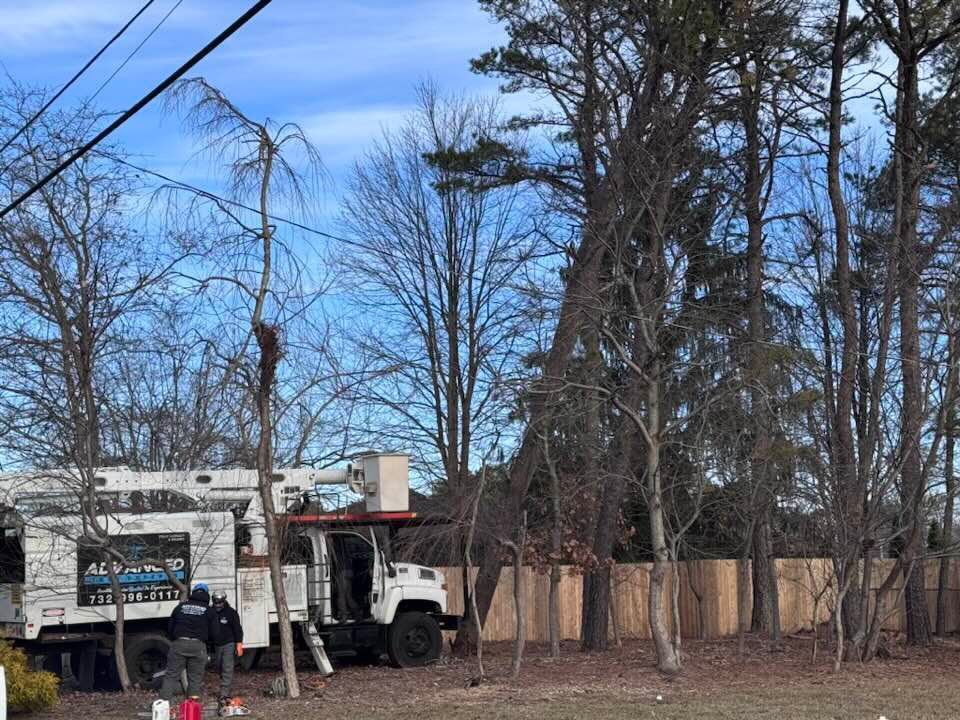
Safe Removal When Trees Become Hazards
Tree Removal in Toms River for dead, damaged, or hazardous trees threatening homes and structures
Trees positioned near homes or utility lines require careful planning before removal to prevent damage to surrounding property and infrastructure. Advanced Tree Experts handles tree removal in Toms River, Manchester, Manahawkin, and surrounding areas for hazardous, dead, damaged, or unwanted trees using specialized equipment designed for controlled dismantling in confined spaces. When trees show extensive decay, storm damage, or root failure, removal becomes necessary to eliminate the risk of uncontrolled collapse.
The removal process accounts for tree lean, weight distribution, and proximity to structures, then uses rigging systems to lower sections in a controlled sequence rather than allowing them to fall freely. Protecting surrounding landscaping throughout the project means using ground protection and staging cut sections away from plants, driveways, and fencing.
Request a site evaluation to determine the safest removal approach for trees near your property.
What Proper Tree Removal Requires
Removal near structures involves sectioning the tree from top to bottom, using ropes and rigging to control each piece as it's cut and lowered to the ground. This prevents limbs or trunk sections from swinging into buildings, power lines, or adjacent trees during the process. Equipment selection depends on access—smaller properties may require compact machinery while open areas allow larger cranes that speed up removal.
Once the tree is down, you'll notice the site is cleared of all wood debris, and the stump is cut flush with the ground or ground below grade depending on your preference. Complete site cleanup means removing branches, logs, and sawdust so the area is ready for lawn restoration or new plantings without leftover obstacles.
Removal recommendations are based on visible decay patterns, structural failure signs like cracks or splitting, and whether the tree poses immediate risk to people or property. Some trees can be preserved through pruning or cabling, but others with extensive internal rot or root damage require full removal to prevent collapse.
Questions About Tree Removal
Homeowners often want to know what the removal process involves and how surrounding property is protected during the work.
Advanced Tree Experts evaluates tree condition and site constraints before recommending removal and determining the safest approach for your property. Contact our office to schedule a free estimate for hazardous or unwanted tree removal.
How is a tree removed near a house?
The tree is dismantled in sections starting from the top, with each piece rigged and lowered using ropes to control descent and prevent contact with the structure.
What equipment is used for removal?
Chainsaws, rigging ropes, and sometimes cranes or bucket trucks are selected based on tree size, location, and access constraints specific to the property layout.
How long does tree removal take?
Removals range from a few hours for smaller trees in open areas to a full day for large trees near structures, depending on rigging complexity and site conditions in Toms River.
What happens to the wood after removal?
Logs can be cut into manageable sections and left on-site if you plan to use them, or hauled away as part of complete cleanup depending on your preference.
Is stump removal included?
Stump grinding is a separate service that removes the remaining stump below ground level, which is recommended if you plan to replant or restore lawn in that area.